

Academics
DEVELOPING LEADERS IN ENGINEERING, SCIENCE AND TECHNOLOGY
Academics at University of Michigan Engineering
We aspire to weave scientific, technological and leadership fundamentals into every aspect of our curriculum – equipping students with core competencies in engineering, leadership, and artificial intelligence that prepare them to lead what’s next.
No matter where you are along your career path, we can help you take the next big step. Explore your options and let us know what we can do for you.
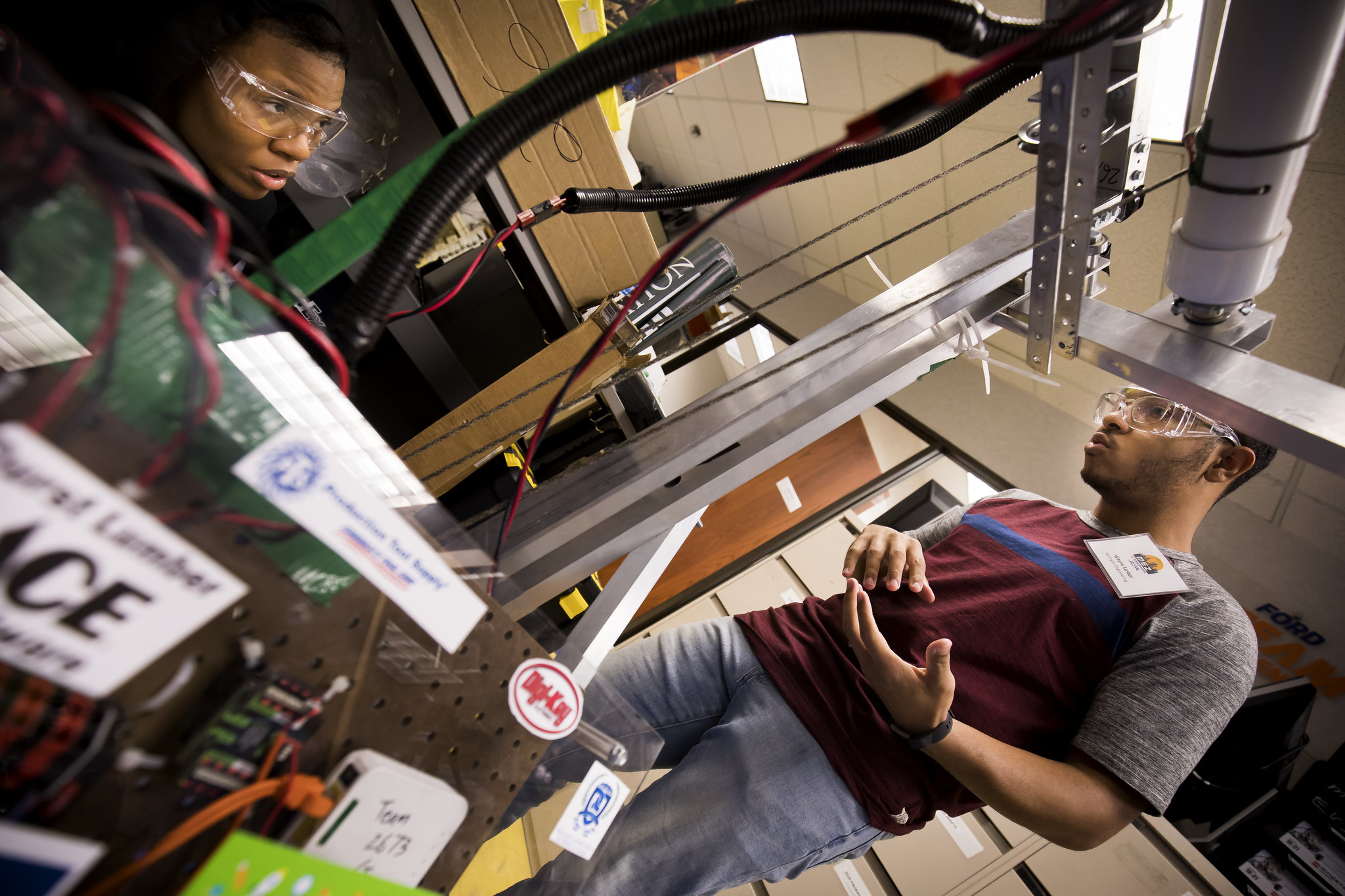
Majors
Your career is a lifelong learning process. Seek out a major that aligns with your interests and values.

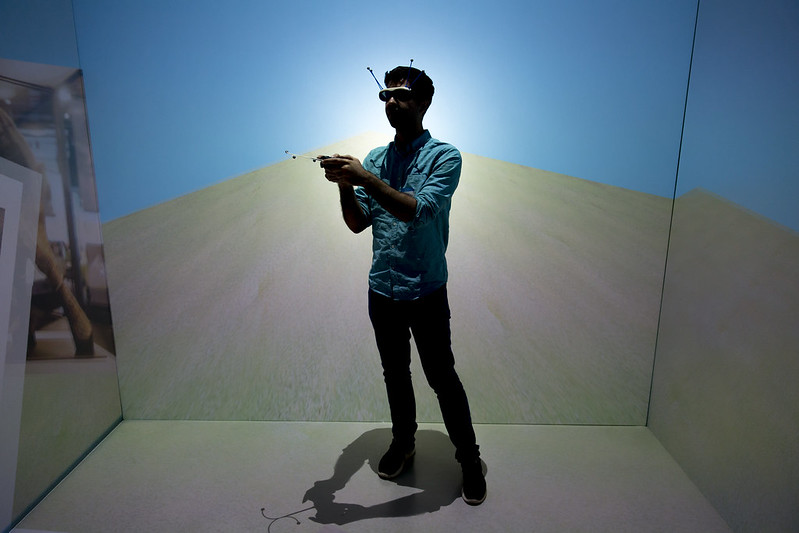
Master’s programs
On average, graduates earn roughly 5.8% more with a master’s degree upon graduation (FY24).
Engineering courses
The Course Guide and Bulletin is your definitive source for all things academic within the College.
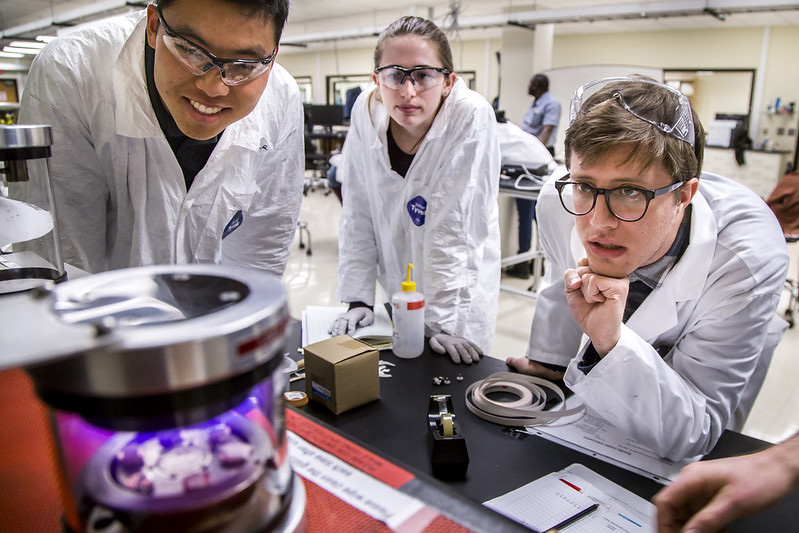
Undergraduate Majors
With 18 undergraduate majors across 14 departments, you can turn your passion into a meaningful career. Explore your specific interests through our minors and hands-on educational opportunities. Engineers are consistently paid the highest average starting salary, according to the U.S. Bureau of Labor Statistics (BLS).

Graduate & professional programs
Fine-tune your future with an advanced degree. With specialized, integrated skills and leadership abilities, you’ll be in demand. PhD, master’s, or professional certificates — we have the engineering programs to empower your biggest ideas, no matter what your undergraduate degree is.
Immersive, hands-on experience
Because hands-on discovery is embedded in our educational experience, our students don’t just study existing technologies – they’re immersed in the interdisciplinary process of creating what comes next. Through Immersed, you can engage in student-led teams, entrepreneurial ventures or advanced research to gain the insight and experience to chart the future of engineering.
There is more than one way to become a leader.
Michigan Engineering provides:
- Personalized roadmaps based on student interests (courses, research, certificates, student orgs, study abroad, etc.)
- Transformational experiences on campus and beyond
- Mentorship opportunities such as alumni coaching with the Entrepreneurship Leadership Program
Departments & programs
Our top ranked departments and programs are home to world class facilities and instructors. Each is unique but they all intersect. Find your fit and pursue your passion.
One-year masters
Current U-M undergraduate? Maximize your time and tuition by earning a master’s one year after your bachelor’s degree. With a little early planning, our Sequential Undergraduate/Graduate Studies (SUGS) program makes it easy. Talk to your department’s graduate coordinator to learn more.