
Artificial Intelligence
Leading AI’s foundation and future
University of Michigan Engineers are at the forefront of advancing artificial intelligence, from its core enabling technologies to impactful, interdisciplinary applications that address today’s complex challenges. Our pioneering research and education builds on longstanding leadership that goes back to the dawn of the information age.
With the Michigan AI Lab and the department of electrical and computer engineering as the foundation, our faculty continue to advance the models that underpin all AI technology, including generative AI, machine-learning and deep-learning models that uncover patterns in complex data, as well as the computer-vision and natural language models that serve as the “brains” of robots that can learn from people and adapt to new situations.
Our faculty partner across the University, harnessing U-M’s breadth of expertise to explore new applications and integrate this technology into critical areas like healthcare, through the AI & Digital Health Innovations and e-Health and AI partnerships with Michigan’s prestigious hospital, as well as energy, mobility, semiconductors and more. They also work closely with industry to improve AI performance and implementation, and they advise policy makers on how to ensure AI models are accurate, trustworthy and sustainable. We educate graduates that go on to be world leaders in AI research.
Ranked AI research university
16 faculty among field’s most cited

How U-M engineers and clinicians are unlocking AI’s healthcare potential
“Practicing medicine is hard and it feels like it’s getting harder. AI can help clinicians deliver really high quality care.”
Advancing AI for today’s biggest challenges

Core Technology
Improving the capability and trustworthiness of AI
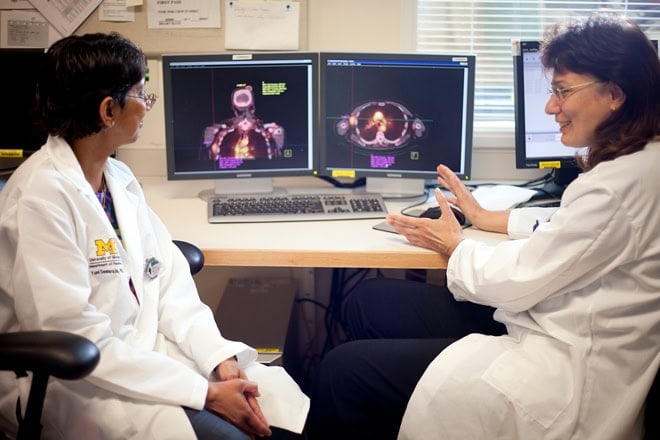
Healthcare
Creating tools to discover new medicines and novel treatments
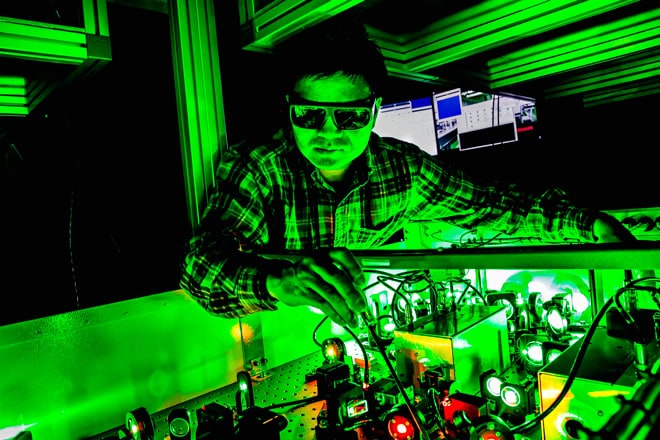
Energy
Finding novel fuels and more efficient infrastructure and practices
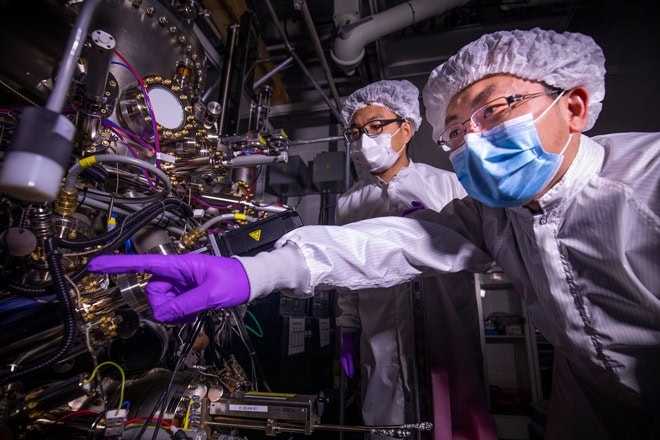
Semiconductors
Designing the hardware to unlock the potential of AI
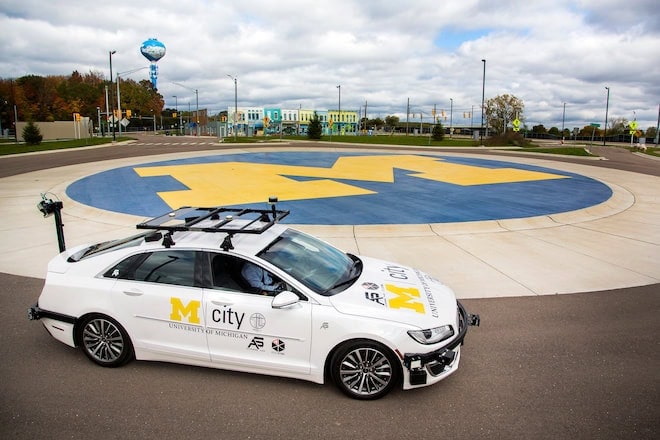
Mobility
Advancing and integrating systems for future autonomous vehicles
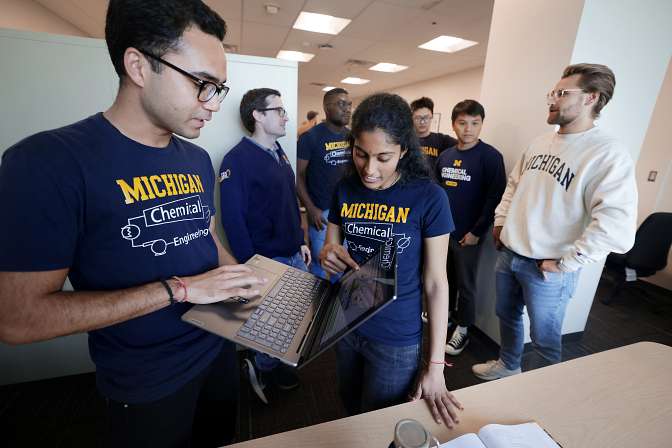
Scientific discovery
Uncovering new findings hidden in complex data sets
In the News
U.S. News & World Report
JANUARY 21, 2026
AI could make at-home balance exercises more effective
IEEE Spectrum
August 25, 2025
Does computing face a lean future?
MIT Technology Review
May 20, 2025
We did the math on AI’s energy footprint.
$223M
and counting in research awards since 2020
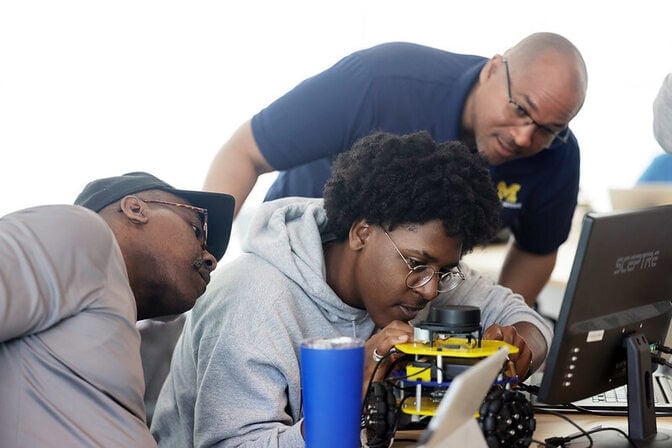
AI Education
Training the next generation of AI scientists and engineers
Our AI legacy
Faculty at University of Michigan Engineering have been at the forefront of machine learning and artificial intelligence research, and our graduates and professors started several research fields that served as the foundation for modern artificial intelligence. Claude Shannon, who graduated from Michigan Engineering in 1936, started the field of information theory and became widely known as the “father of the information age.” Professor John Holland developed genetic algorithms and learning classifier tools—two tools that are now the current standard for machine learning and computational science. His 1975 book, titled “Adaptation in Natural and Artificial Systems,” remains one of the most frequently cited works on artificial intelligence. Computer chips have the power required to train today’s massive AI models, thanks to the very large-scale integration technology developed by Professor Lynn Conway around the same time as Holland’s book.
We continued to advance the field with the founding of the Michigan AI Lab in 1988. The lab started as a collection of faculty interested in computer vision, but by the ’90s, the lab had attracted a critical mass of researchers working on several major problems in AI. It was one of the larger AI labs at the time, and it explored some of the broadest research avenues.
Several active researchers in the AI Lab and throughout Michigan Engineering are currently among the top one percent of the world’s most cited computer scientists. Michigan Engineering has also trained students that are now world leaders in AI research today, including Waymo co-CEO Dmitri Dolgov, Jordi Ribas, the Corporate Vice President of Search & AI at Microsoft, Peter Wurman, who co-founded the company that became Amazon Robotics, and Kunle Olukotun, a Stanford professor and founder of SambaNova—a company developing some of the fastest AI chips and inference servers.
Today, Michigan Engineering continues to advance the capabilities of AI for both public use and scientific discovery. They work closely with industry experts to improve AI model designs, improve how AI is implemented, and explore new application areas. They also advise policy makers on how to ensure AI models are accurate, trustworthy and sustainable. More than 120 Michigan Engineering researchers are affiliated with the Michigan Institute for Computational Discovery and Engineering (MICDE), where they are working toward a future where AI can help answer some of the most pressing scientific questions of the time. They are also partnering with Los Alamos National Laboratory on a $1.25 billion initiative to build a state-of-the-art supercomputing facility in Ann Arbor.
45+
years
leading AI research
Facilities, Institutes and Programs
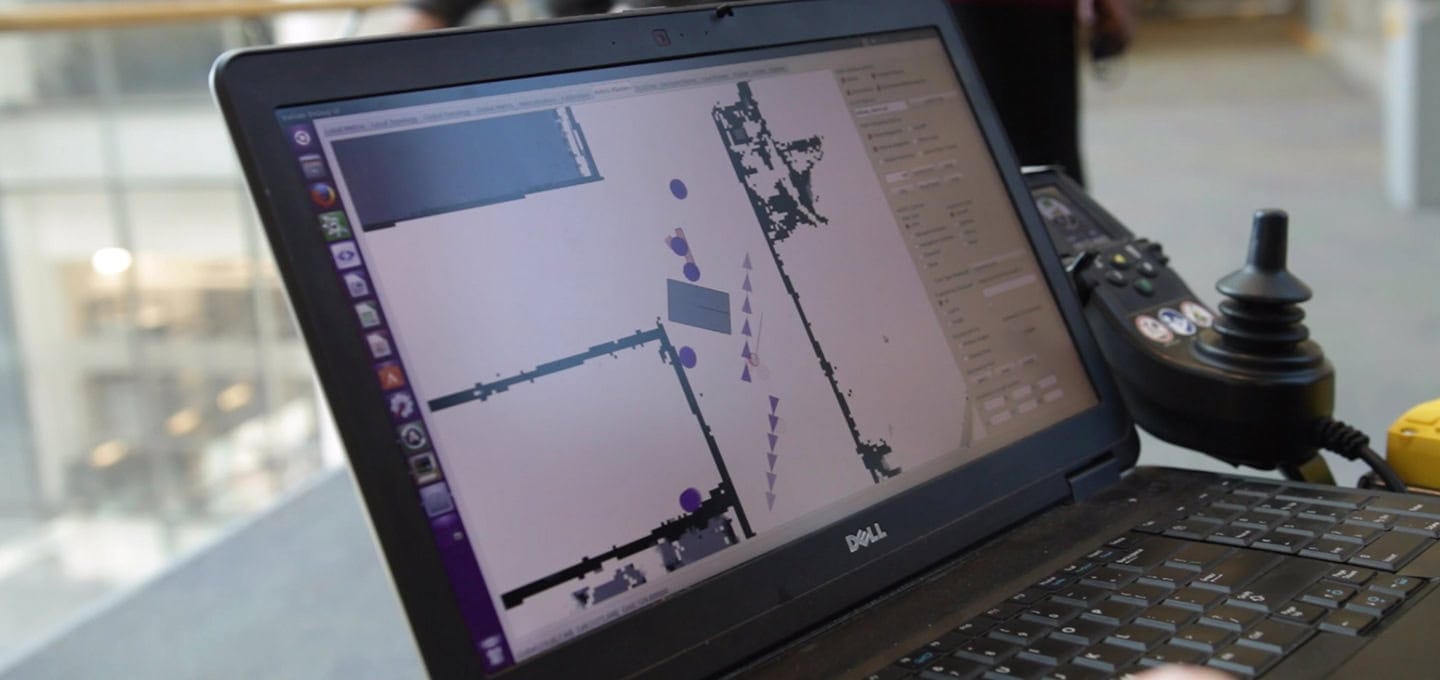
Michigan AI Lab
The AI lab brings together award-winning experts to develop new thinking and applications for AI.

Michigan Institute for Computational Discovery and Engineering (MICDE)
MICDE supports research that uses generative AI models to drive scientific discovery from large amounts of unstructured data.

Los Alamos National Laboratory collaboration
In partnership with LANL, we will build a supercomputing facility that will develop AI models for defense and other research applications.

Michigan Institute for Data & AI in Society (MIDAS)
MIDAS enables transformative use of AI across a wide range of research domains.
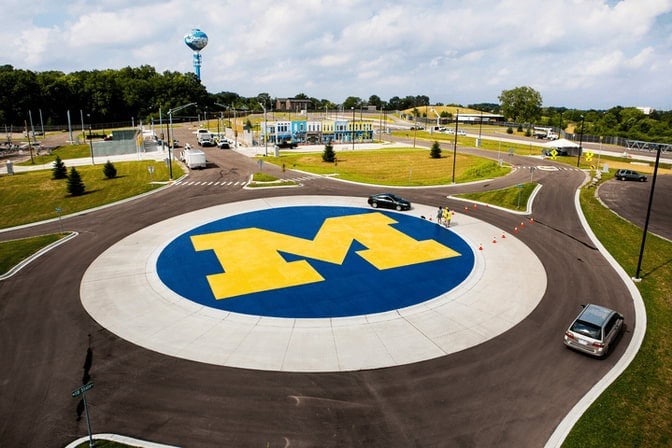
Mcity
Mcity and the U-M Ford Center for Autonomous Vehicles provide resources to improve the AI models behind autonomous vehicles.
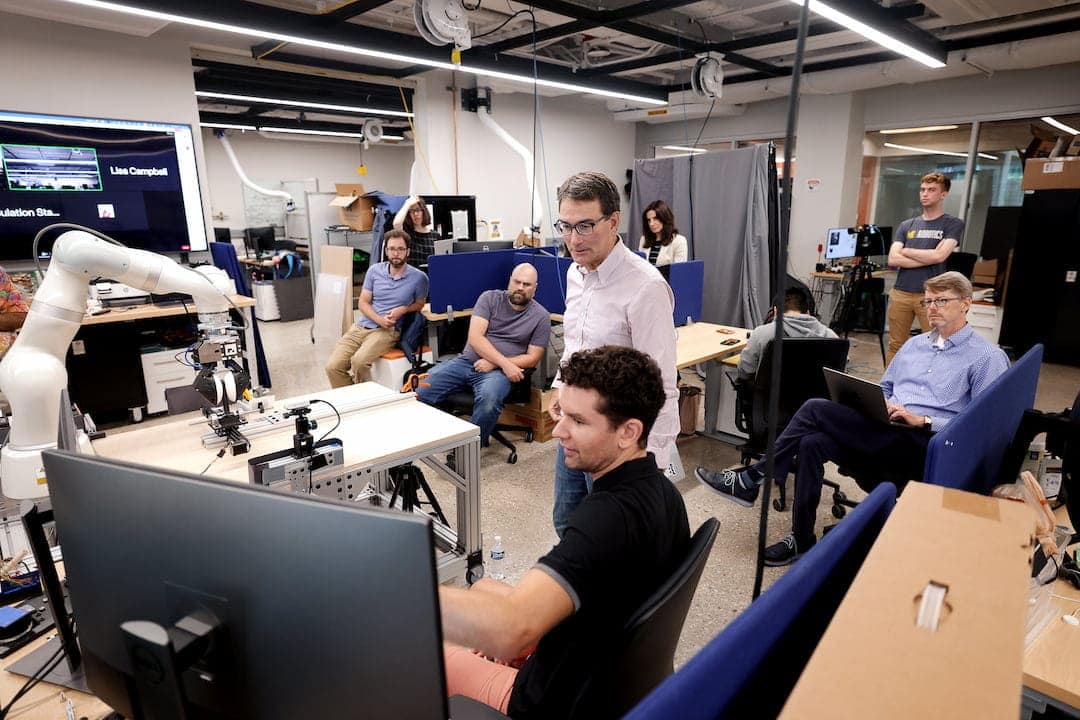
AI Connections Program
The AI Connections Program facilitates and enables formal collaborations between academic researchers and industry partners.
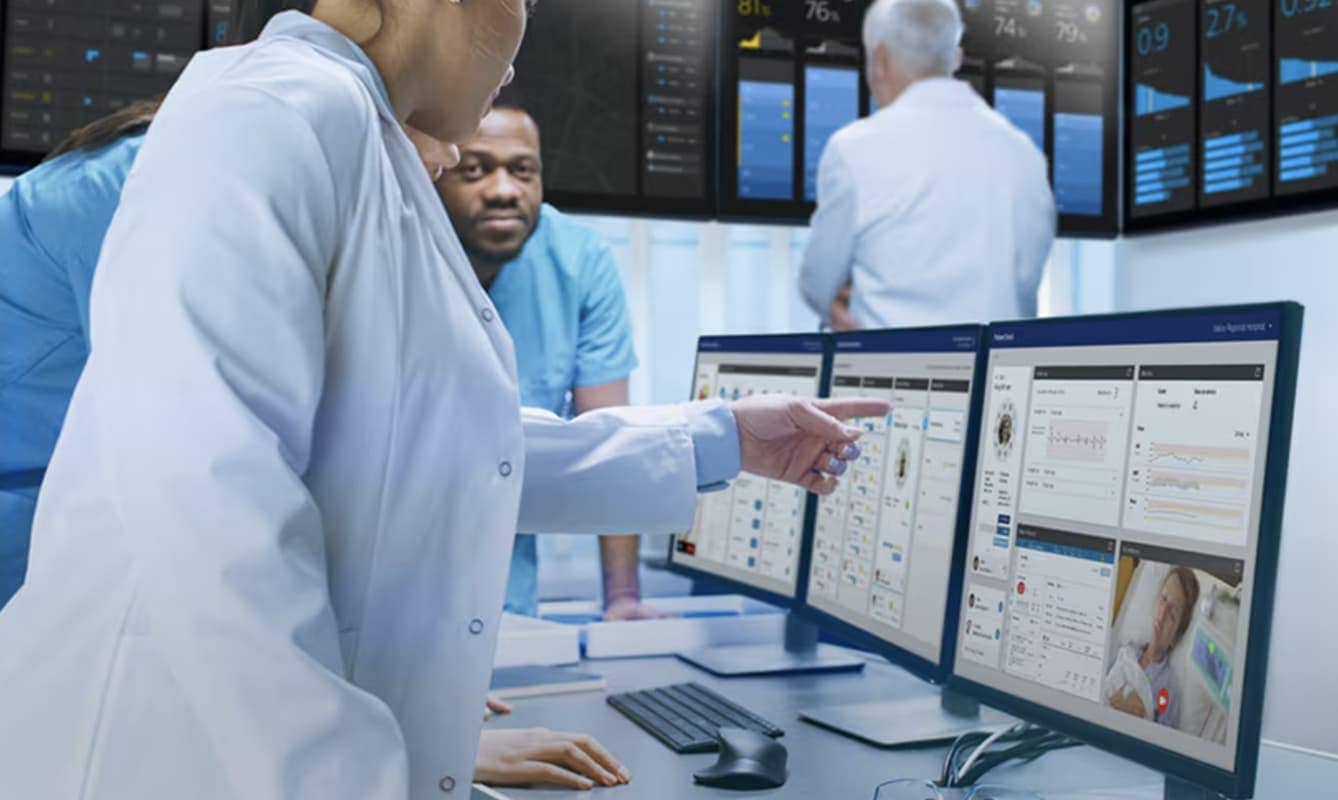
AI & Digital Health Innovation
Accelerates research at the intersection of AI and healthcare by providing access to clinical data, workflows, and interdisciplinary project support through our core communities.
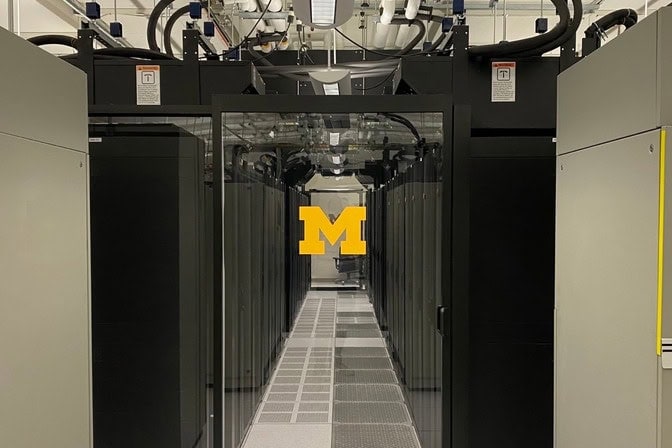
Real-world impact through these startups and more
- MayMobility, developing and deploying autonomous vehicles
- Ambiq, makes energy-efficient chips that enable edge AI on battery-powered devices
- MemryX, develops AI accelerator chips for edge AI
- Voxel51, creates developer-friendly tooling for computer-vision data
- SaferDrive AI, a genAI simulation platform for testing autonomous vehicles
- SoarTech, develops autonomous software agents that can assess large amounts of human knowledge and assist human decision-making.
- InitiumAI, makes AI powered support tools for grant writing
- Zensors, develops AI that analyzes work space a flows from sensor and camera data and autonomous agents that make operation decisions
- AngioInsight, makes tools that assist clinicians in evaluating angiographic images.
- LearningClues, makes software that turns course content into citation-backed study tools and teaching materials